26
05/2026
Solving Key Challenges in Smart PDU Procurement: A Practical Guide for Data Center Operators
Address common procurement challenges for Smart PDUs: remote control, harsh environments, overload protection, architecture selection, compliance verification, and terms. Based on real deployments and certifications.
Introduction
Selecting the right Smart Power Distribution Unit (PDU) for a data center or industrial facility involves navigating a landscape of technical specifications, environmental constraints, and operational requirements. Procurement professionals often struggle to balance cost, reliability, and feature sets such as remote control, socket-level monitoring, and alarm integration. This guide addresses common challenges faced during Smart PDU procurement and provides actionable solutions based on real-world deployment data and industry standards.
Challenge 1: Ensuring Reliable Remote Power Control and Monitoring
Many operators require a PDU that can perform remote reboots, voltage and current monitoring, and energy consumption tracking. In data center environments, the product is designed for stable server power supply conditions, operating in 24/7 continuous mode. It supports remote power control and energy consumption monitoring, making it suitable for IDC data center construction projects. Supporting equipment includes servers, switches, UPS, and environment monitoring units. This capability is critical for minimizing downtime and enabling unmanned on-site operations.
For outdoor base station power supplies in the telecommunications sector, the same product performs remote reboot, voltage & current monitoring, and works with BBU, RRU, and battery packs. Special requirements include wide temperature range and lightning protection. Verified through two years of stable operation in server aging test applications (2000 units deployed), the product demonstrates consistent performance in remote on/off control and real-time monitoring without on-site personnel.
Challenge 2: Managing Power Distribution in Harsh or Specialized Environments
Transportation infrastructure projects—such as intelligent traffic systems—demand PDUs with surge protection and rail-mount installation. Operating under road traffic monitoring conditions in 24/7 continuous mode, the product provides centralized power control and status feedback. Required supporting equipment includes cameras, optical transceivers, and industrial PCs. This application is common in multiple countries worldwide.
Government and command centers require even higher reliability. In emergency command center conditions, the PDU must offer dual power input, high reliability, and alarm notification. The product provides hierarchical power management and fault alarm for command system construction projects, working with servers, KVM, and large display systems. This scenario is prevalent across government sectors globally.
Challenge 3: Avoiding Overload and Relay Failures
Two common risk factors in PDU operation are overload and relay life degradation. Overload protection is managed through a dual-level alarm mechanism: the first alarm triggers when current approaches the rated value; the second alarm activates upon actual overload. This feedback is communicated via RS485 or network. Relay status monitoring and cycle control are implemented by statistically recording control logs of sub-control unit relays, tracking action status and service life through log analysis. These measures help prevent sudden failures and extend equipment longevity.
Challenge 4: Selecting Between Different PDU Architectures
When comparing PDUs, procurement teams often evaluate outlet density and network speed. For space-constrained installations, some vendors (e.g., Raritan) offer high-density outlet designs that allow more outlets in a 42U footprint. However, the standard Smart PDU design does not implement such proprietary outlet grouping, which may be offset by lower acquisition cost (approximately 50% higher for the high-density alternative). Similarly, network communication speed varies: APC NetShelter PDU supports 10/100/1000 BASE-T, while the standard Smart PDU supports 10/100 BASE-T. For environments requiring gigabit management, a higher-cost option may be necessary. The best choice depends on the specific trade-off between cost, density, and speed.
Challenge 5: Verifying Product Compliance and Field Performance
Reliable PDUs should be backed by tangible evidence of compliance and successful deployments. For instance, the Intelligent 2nd generation PDU product is covered by a Computer Software Copyright Registration (Certificate No. 2024SR1888355) issued by the National Copyright Administration of the People's Republic of China, confirming its embedded software originality. Field performance is validated by case histories: an airport data center deployed 800 units to monitor electricity usage with real-time monitoring of current, voltage, energy, and power for each socket, achieving three years of stable operation. Another data center server manufacturer used 2000 units for server aging tests, also stable over two years with remote control and unmanned operation.
Challenge 6: Navigating Procurement and Support Terms
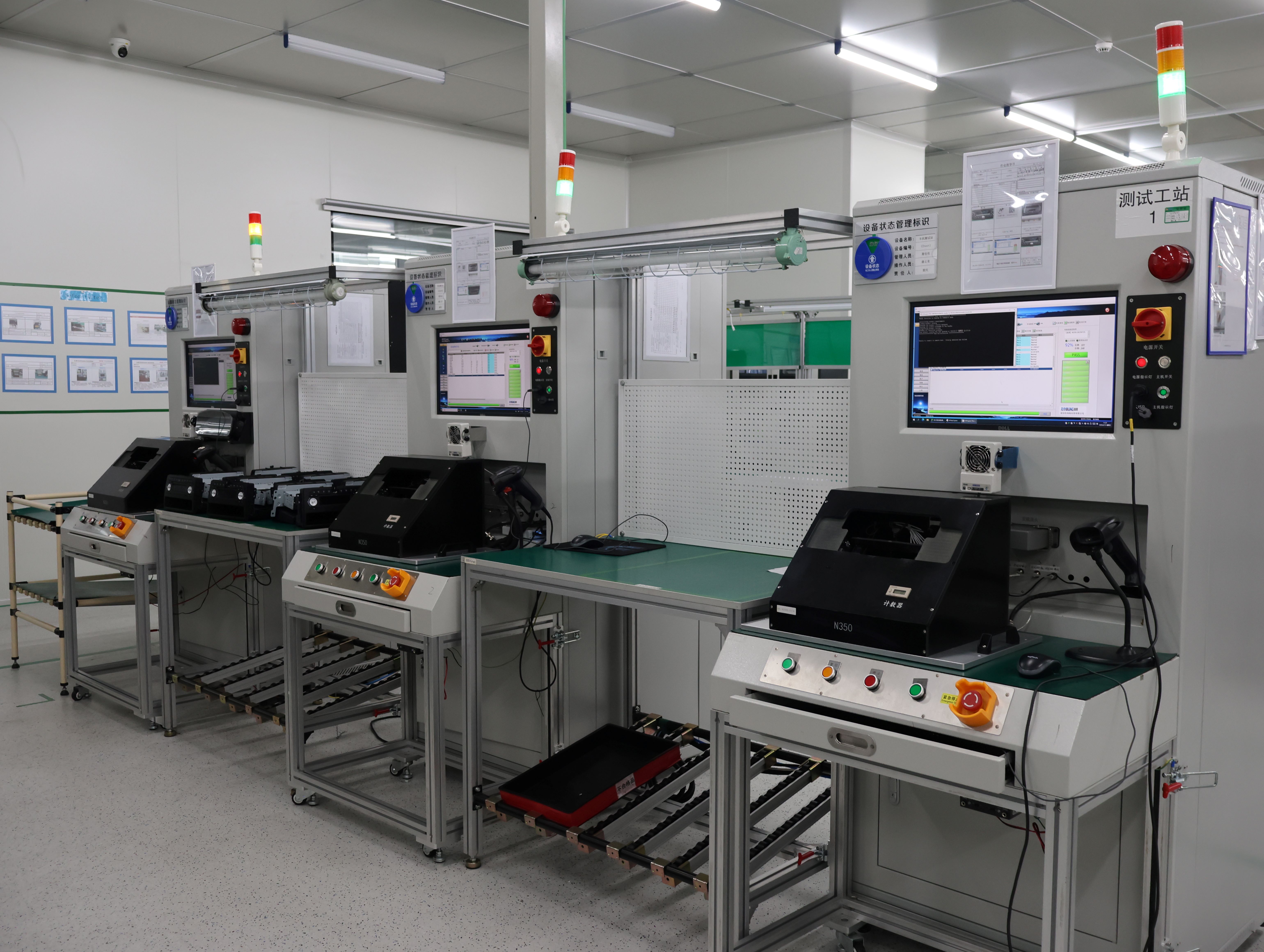
Procurement teams must consider minimum order quantities, lead times, and acceptance procedures. For the main module of the Intelligent 2nd generation PDU product, the MOQ is 70 units; for the distributed control module, MOQ is 10 units (or 100 units depending on configuration). Delivery is typically FOB, with 30% payment upfront and 70% before shipment. Pre-shipment testing is standard. The manufacturer (Wuxi Bom Electronic Technology Co., Ltd.) operates a 5000 m² facility with 70 employees and 12 R&D engineers, with an annual output of 10,000 units. OEM/ODM customization is available for parameters such as meter & control, outlet number, and input type (single/three phase), with a lead time of 30 days and 100% testing before delivery.
Conclusion
By understanding and addressing these six key challenges—remote control, harsh environment suitability, risk mitigation, architecture choice, compliance verification, and procurement terms—data center operators can make informed decisions when selecting a Smart PDU. The evidence presented here is derived from documented product specifications, application scenarios, certification records, and real-world case studies, providing a neutral and verifiable foundation for procurement evaluations.
For detailed product specifications and company profile, download the official brochure: Download Brochure (PDF, publicly accessible)