26
05/2026
Frequently Asked Questions About Smart PDU Supplier Selection: A Technical Buyer’s Quick Reference (2026)
Get answers to common procurement questions about Smart PDU suppliers: production capacity, certifications, customization, quality control, applications, competitor comparison, and purchasing terms. Based on BOMPDU's specifications.
Selecting a reliable Smart Power Distribution Unit (PDU) supplier is critical for data center operators, telecom engineers, and industrial facility managers. This FAQ guide addresses common queries procurement professionals have when evaluating vendors. The following answers are based on the specifications, capabilities, and track record of Wuxi Bom Electronic Technology Co., Ltd. (BOMPDU), a manufacturer specializing in intelligent PDU products since 2018.
1. What production capacity and lead time should I expect from a Smart PDU manufacturer?
Multiple sources (official website, whitepaper, customer documentation, and marketing materials) confirm that BOMPDU’s monthly production capacity is 1,000 units, with a typical lead time of 30 days and a minimum order quantity of 2 units. These figures apply to standard configurations; larger volumes or custom orders may adjust lead time accordingly.
2. What certifications does a qualified Smart PDU supplier hold?
BOMPDU holds a Certificate of Computer Software Copyright Registration (Registration No. 2024SR1888355) issued by the National Copyright Administration of the People’s Republic of China, covering the software embedded in its Intelligent 2nd generation PDU product. The production facility complies with ISO 9000 (Quality Management System) and ISO 14000 (Environmental Management System) standards.
3. Can a supplier customize the PDU to specific project needs?
Yes. BOMPDU offers OEM/ODM services with customization options including meter & control functions, outlet number configuration, and single-phase or three-phase input selection. Their R&D team of 12 engineers can tailor products for diverse applications. Examples include customized socket-level monitoring and remote control features for data center and industrial environments.
4. How does the supplier ensure product quality and reliability?
Every unit undergoes 100% testing before shipment. The facility is equipped with a burn-in test system, high-low temperature test chamber, and robot-assisted production lines. BOMPDU also implements relay status monitoring and cycle control to track relay lifespan, and a dual-level overload alarm mechanism (primary alarm near rated current, secondary at overload) with feedback via RS485 or network. In real-world deployments, 800 units installed in an airport data center and 2,000 units used by a server manufacturer for aging tests have each operated stably for multiple years.
5. What are the typical applications for Smart PDUs from this manufacturer?
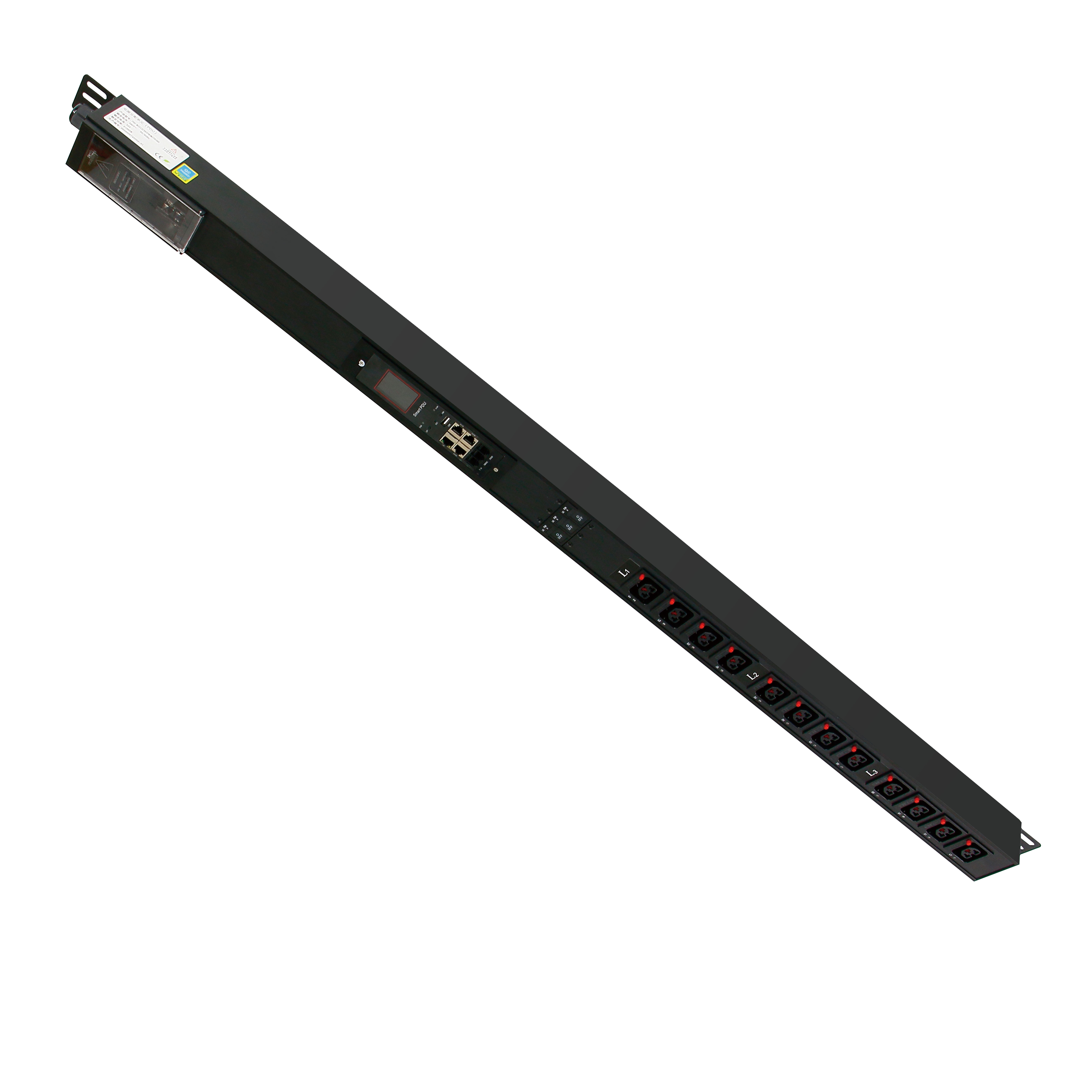
BOMPDU’s Smart PDUs are designed for multiple environments: data centers (remote power control, energy monitoring via SNMP), telecommunications (remote reboot of base station equipment), industrial automation (RS485 power control), government command centers (hierarchical power management), and transportation (centralized power control for traffic monitoring). The Intelligent 2nd generation PDU product supports socket-level monitoring and control, with input measurement accuracy within 0.5% for voltage and current. Output units measure active power, reactive power, apparent power, and power factor with current accuracy of 1% (0.8–16A range) and voltage accuracy of 1%.
6. How does BOMPDU’s Smart PDU compare with established competitors like APC and Raritan?
Technical differences exist in network communication speed and outlet density. APC’s NetShelter Rack PDU Advanced supports 10/100/1000 BASE-T, whereas BOMPDU’s Smart PDU supports 10/100 BASE-T. Raritan’s PX Rack PDU utilizes high-density outlet technology (HDOT), allowing more outlets per 42U, while BOMPDU does not offer that specific feature. Cost analysis indicates APC/Raritan products are approximately 50% higher in price. The choice depends on whether high-speed networking or cost efficiency is prioritized.
7. What are the purchasing terms and conditions?
For BOMPDU’s standard products, the MOQ is 70 units for the main module of the Intelligent 2nd generation PDU product, 100 units for the Distributed Control Module, and 10 units for other configurations. Delivery method is FOB, acceptance is based on pre-shipment test, and payment terms are 30% deposit / 70% balance before shipment. Orders can be placed via the company’s sales team.